Could You Have Both
Insomnia and Sleep Apnoea?
What the Latest Research Reveals
By Andrew Heathcock | SynapReset Insomnia Therapy, Brisbane
The Sleep Problem That Often Goes Unrecognised
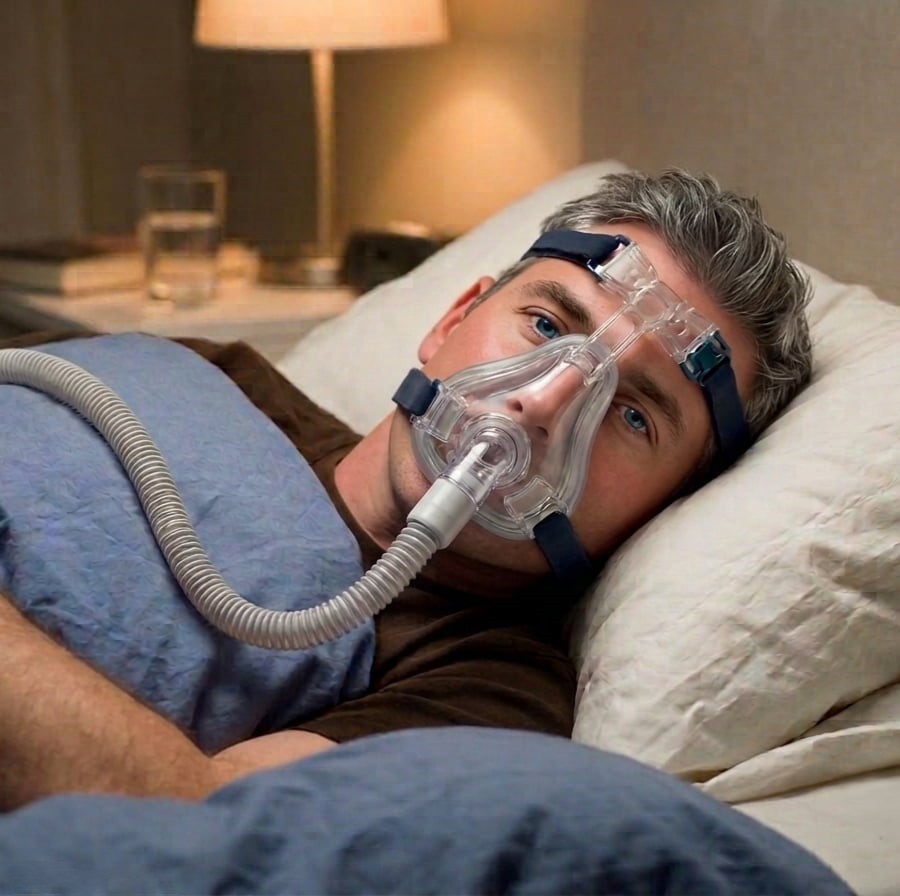
You’ve been told you snore. Maybe you’ve had a sleep study. Perhaps you’re already using a CPAP machine — but you’re still not sleeping well. You still lie awake, still toss and turn, still wake in the early hours with a mind that won’t switch off. And the machine that is supposed to fix your sleep you find intolerable.
If this sounds familiar, you may be dealing with something more complex than sleep apnoea alone.
Emerging research is shining a spotlight on a condition that affects far more Australians than most people realise — and that is routinely missed, undertreated, or managed incorrectly. It’s called COMISA: Comorbid Insomnia and Sleep Apnoea.
Two of the Most Common Sleep Disorders — Together
Insomnia and obstructive sleep apnoea (OSA) are the two most prevalent sleep disorders in Australia. What researchers are now recognising is just how frequently they occur together.
The Sleep Health Foundation reports that around 30 to 40% of people with insomnia also have sleep apnoea, and approximately 30 to 50% of people with sleep apnoea also report insomnia symptoms. In the general population, up to 10% of Australian adults are thought to have COMISA.
That is a significant proportion of the population carrying a dual sleep burden — and many of them don’t know it.
The two conditions can look deceptively similar on the surface: poor sleep, daytime fatigue, difficulty concentrating, low mood. But they have different underlying mechanisms, and — critically — they interact with each other in ways that make both conditions harder to treat.
Why COMISA is More Than the Sum of Its Parts
A major study published in the Journal of the American Heart Association, analysing data from nearly one million post-9/11 US veterans, found that adults with both insomnia and obstructive sleep apnoea face a significantly higher risk of high blood pressure and cardiovascular disease compared with those who have only one of the conditions. And importantly these findings are not isolated. Many studies have now shown that COMISA is associated with far worse outcomes than either sleep apnoea or insomnia alone.
The underlying reason for this compounding effect is not difficult to understand. Sleep apnoea repeatedly deprives the body of oxygen throughout the night. Insomnia keeps the nervous system in a state of chronic hyperarousal with elevated stress hormones, heightened alertness, and an inability to fully switch off. Together, these two processes attack the body’s ability to recover overnight from two directions simultaneously.
Why COMISA Is So Often Missed
Despite its prevalence, COMISA frequently goes undiagnosed — or only partially treated.
Most sleep clinics and GPs are well set up to screen for and manage sleep apnoea. CPAP therapy is offered, the breathing problem is addressed, and that is often where the treatment ends. But if insomnia is also present, CPAP alone will not resolve it. In fact, people with COMISA are less likely to accept and adhere to CPAP therapy — the most effective treatment for sleep apnoea — compared to those with sleep apnoea alone.
This creates a frustrating cycle: the insomnia makes CPAP harder to tolerate, and the untreated sleep apnoea makes the insomnia harder to resolve. Without addressing both conditions, many patients remain caught in the middle — sleeping poorly despite doing everything they’ve been told to do.
What Actually Works for COMISA
The good news is that effective treatment exists for both conditions — and treating them together produces significantly better outcomes.
CBT-I (Cognitive Behavioural Therapy for Insomnia) is the best available treatment for insomnia, and is effective in people with COMISA. For moderate to severe sleep apnoea, Continuous Positive Airway Pressure (CPAP) therapy remains the most effective intervention.
Research supports treating the insomnia component first, or alongside CPAP — not as an afterthought. Combined treatment with positive airway pressure therapy and CBT-I has shown better patient outcomes compared to either treatment alone.
How Do You Know If You Might Have COMISA?
You may be living with both conditions if you recognise any of the following:
COMISA is not rare. It is simply under recognised.
The Importance of Getting the Right Assessment
Because insomnia and sleep apnoea can mask each other’s symptoms, and because they require different — but complementary — treatment approaches, an accurate assessment is essential.
At SynapReset Insomnia Therapy, we work specifically with the insomnia component of sleep disorders, including in people who also have, or suspect they may have, sleep apnoea. If you haven’t yet been assessed for sleep apnoea, we can help point you in the right direction.
If you have already been diagnosed and are still struggling, we can address the insomnia piece of the puzzle that CPAP alone cannot fix.
Take the First Step
I’m Andrew Heathcock, an advanced practice pharmacist and Level 1 CBT-I Practitioner, and founder of SynapReset Insomnia Therapy.
If you’ve been struggling with sleep despite treatment — or if you suspect your insomnia may be more complex than it appears — I’d like to offer you a complimentary 15-minute consultation to talk through your situation and explore whether the SynapReset program is the right fit for you.
Based in Brisbane and available Australia-wide via Telehealth, we make it easy to get started — no referral needed, no downloads, just a single click to join your session.
📞 Call us: 0461 571 392
📧 Email: contact@synapreset.com.au
🌐 Website: www.synapreset.com.au
Andrew Heathcock is a sleep therapist and advanced practice pharmacist with 20 years of experience in healthcare. He is a certified CBTi Level 1 Practitioner and founder of SynapReset Insomnia Therapy, Brisbane.
Related Articles:
Why Can’t I Sleep Through the Night?
What is CBTi and How Does it Treat Insomnia?
5 Signs You Have Sleep Maintenance Insomnia
© 2026 SynapReset Insomnia Therapy, Brisbane QLD Australia